
Free Clinical Playbook • Practitioner Edition
A Practical Guide to Using CES Across a Wider Range of Clinical Conditions
Including Real-World Applications Beyond Anxiety and Insomnia
Cranial Electrotherapy Stimulation (CES) is widely known for anxiety and insomnia.
What’s less often discussed is how clinicians are beginning to explore its use across a broader range of conditions.
This playbook was created to bring structure to that experience.
It compiles practical guidance on how CES is being applied in different clinical contexts, how protocols may vary from one patient to another, and how to approach treatment with clarity and consistency.
- ✓ Condition-specific guidance across multiple presentations
- ✓ Practical protocols that can be adapted to real patients
- ✓ Clear notes on safety, response patterns, and clinical judgment
By Tauna Young and Tyson Flower • Trusted by Practitioners
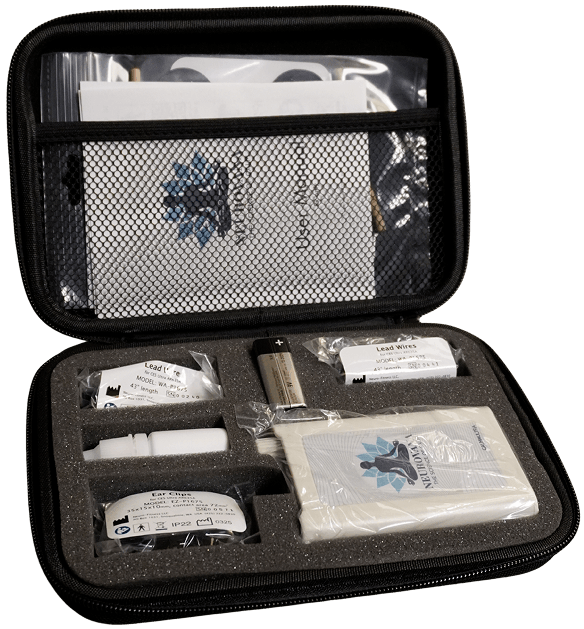
Why CES Deserves to be on Your Options List
When considering treatment for anxiety and insomnia, most clinicians are already familiar with medications, therapy, and behavioral interventions.
CES is another option that has been studied for decades and continues to gain attention for its safety profile and clinical potential.

Evidence-Based Foundation
CES has been evaluated in multiple clinical studies, particularly in anxiety and sleep related conditions, with consistent findings supporting its use in these areas.

Favorable Safety Profile
CES is non-invasive, well tolerated, and can be used alongside other treatment approaches. It does not introduce the same concerns related to dependency or systemic side effects.

Clinical Observations Beyond Core Indications
In practice, clinicians have explored CES in a wider range of scenarios, including:
-
chronic pain conditions -
post-traumatic stress symptoms -
stress-related dysregulation -
certain neurodevelopmental profiles
These applications vary in the level of scientific support available. Understanding that distinction is part of using CES responsibly in practice.
Understanding the Treatment Gap
My path to psychiatric practice began with direct patient care, where I noticed mental health consistently impacting physical health outcomes. Over the years, working in outpatient psychiatry, I’ve treated patients who had already tried multiple medications or experienced difficult side effects. Many of them arrive feeling that they’ve run out of options.
When CES entered my clinical work, it raised an immediate question: Why is something with this level of safety and clinical potential not more widely integrated into everyday care?
"Once I began using CES with patients, I saw it change not only individual outcomes but the overall baseline of calm in my patient population. The gap between CES’s clinical effectiveness and its limited adoption is what drives this educational work."
As I began using it with patients, the results were not limited to isolated symptom changes. There was often a broader shift in baseline regulation and overall stability. At the same time, I noticed something else: There was very little practical guidance on how to apply CES across different types of patients and conditions.
This guide reflects what I’ve learned through clinical experience—bringing together research, practical application, and evidence-based information to support informed treatment decisions.
What People Are Saying
Real experiences from clinicians applying CES across different patient profiles.
"The most helpful part for me was seeing how CES is approached across different conditions. It’s not limited to anxiety and sleep. The sections on chronic pain and trauma gave me a much broader perspective."
"I appreciated how the guide distinguishes between stronger evidence and areas that are still emerging. It helps you read it with the right level of clinical judgment instead of treating everything the same."
"This feels very aligned with real outpatient work. Patients rarely present with just one issue, and the playbook reflects that complexity in a way that’s actually useful."
What You’ll Discover in This Guide

The Structured CES Treatment Protocol
The playbook organizes CES applications into:
- High evidence (strong clinical support)
- Moderate evidence (growing research and validation)
- Observational use (early-stage evidence with documented patient response)
This structure allows clinicians to approach each application with appropriate context and confidence.

Mechanism of Action in Clinical Context
A clear explanation of how CES interacts with the nervous system, including:
- Vagal pathways
- Autonomic regulation
- Implications for anxiety, sleep, and stress
Presented in accessible language for practical use.

Applications Across Multiple Conditions
In addition to anxiety and insomnia, the guide explores CES use in:
- Chronic pain
- PTSD
- emotional dysregulation
- stress-related conditions
- selected neurodevelopmental presentations
Each section includes practical considerations for how CES may be introduced and adjusted in context.
About the Authors
Clinical expertise grounded in real-world patient outcomes.

Tauna Young
FNP-C
Tauna Young is a board-certified Family Nurse Practitioner specializing in psychiatry, with over a decade of hands-on clinical experience treating patients with anxiety, depression, insomnia, chronic pain, ADHD, and other complex psychiatric conditions.
She practices full-time in an outpatient setting, where she evaluates patients daily, prescribes and monitors treatment plans, manages medication side effects, and adjusts care based on real-world response—not theory.
She specializes in working with individuals who have reached a dead end after trying multiple treatments and are still searching for effective solutions. That perspective is what led her to Cranial Electrotherapy Stimulation.

Tyson Flower
FNP-C
Tyson Flower is a board-certified Family Nurse Practitioner specializing in psychiatry, practicing full-time alongside Tauna in an outpatient setting.
His work is grounded in evidence-based evaluation and focused on patient outcomes across a wide range of conditions, including anxiety, depression, insomnia, and treatment-resistant presentations.
When evaluating CES, Tyson approached it through both research and real-world application. What he observed in practice aligned closely with existing evidence, while also highlighting areas where clinical experience is continuing to expand understanding. His focus is on helping translate that knowledge into practical use in everyday care.
Download Your Free Clinical Playbook
Get access to condition-specific CES guidance, levels of evidence, and practical insights drawn from real clinical use.
Get My Free Playbook Now