

EDUCATIONAL RESOURCE
Understanding Medication Side Effects
Learn about common side effects from medications for anxiety, insomnia, and depression—and discover a treatment approach that works differently.
Why Understanding
Side Effects Matters
Medications can be effective tools for managing mental health conditions, but they often come with trade-offs. Many people experience side effects that impact their daily life, relationships, and overall wellbeing. Understanding these effects is the first step toward making informed decisions about your care.

This page is designed to educate you about common medication side effects and help you understand alternative treatment approaches that may offer relief without the same risks.
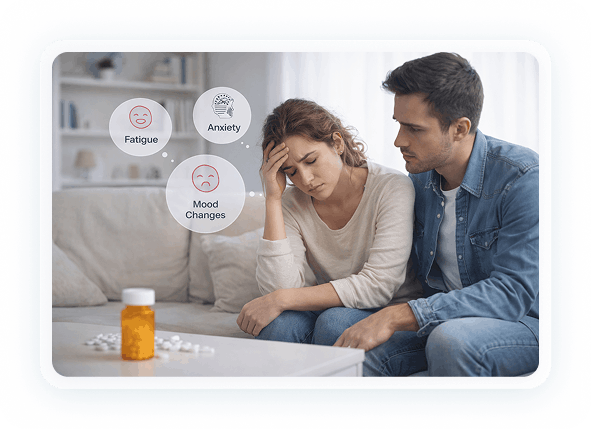
Common Medication Side Effects
Many medications prescribed for anxiety, insomnia, and depression can cause unwanted effects

Drowsiness & Fatigue
Many medications cause excessive sleepiness, making it difficult to stay alert during the day, affecting work performance and daily activities.
- Difficulty concentrating
- Reduced productivity
- Morning grogginess

Weight Gain
Weight changes are common with many antidepressants and anti-anxiety medications, affecting self-esteem and physical health.
- Increased appetite
- Metabolic changes
- Body image concerns

Brain Fog & Memory Issues
Cognitive dulling and memory problems can make you feel less like yourself, affecting mental sharpness and clarity.
- Difficulty remembering things
- Slowed thinking
- Reduced mental clarity

Sexual Dysfunction
Many medications interfere with sexual function, affecting intimate relationships and quality of life.
- Reduced libido
- Difficulty with arousal
- Relationship strain

Digestive Problems
Nausea, constipation, and other gastrointestinal issues are frequent complaints with many medications.
- Nausea and upset stomach
- Constipation or diarrhea
- Appetite changes

Dependency & Withdrawal
Some medications can create physical dependence, making it
difficult to stop without experiencing withdrawal symptoms.
- Physical dependence
- Withdrawal symptoms
- Difficulty discontinuing
How These Conditions Are Connected
Mental health conditions rarely exist in isolation—they often overlap and influence each other
Depression Often Includes Anxiety & Insomnia
People experiencing depression frequently struggle with anxiety and sleep problems as well. These conditions share common brain chemistry patterns and often require comprehensive treatment approaches.
Key insight: Addressing anxiety and sleep issues may positively affect overall mood and wellbeing, as these conditions are deeply interconnected.
Chronic Pain & Sleep Disruption
People living with chronic pain frequently experience insomnia and anxiety. Poor sleep can worsen pain perception, while pain makes it harder to sleep—creating a challenging cycle.
Key insight: Improving sleep quality may help people better manage discomfort and reduce anxiety associated with chronic conditions.
The Anxiety-Insomnia Cycle
Anxiety makes it difficult to fall asleep, and lack of sleep increases anxiety the next day. This creates a self-reinforcing pattern that can be difficult to break without effective intervention.
Key insight: Breaking this cycle by addressing both anxiety and sleep together often leads to better overall outcomes than treating either condition alone.
Understanding these connections is important: When you address anxiety and sleep problems effectively, you may experience improvements in overall wellbeing that extend beyond just those two areas.
A Treatment Approach Without These Side Effects
Neurovana Calm Ultra CES offers FDA-cleared treatment for anxiety and insomnia through Cranial Electrotherapy Stimulation (CES)—a different approach that doesn't carry the same side effects as medications.
What Neurovana Calm Ultra CES May Support:

IMPORTANT NOTE
Never stop or adjust your medications without consulting your healthcare provider. If you're experiencing side effects from your current medications, talk to your provider about your treatment options. Neurovana Calm Ultra CES can be used safely alongside medications and may help reduce your need for medication over time under professional supervision.