
Free Clinical Guide • Practice Edition
Bringing CES to the Forefront of Mental Wellness
A New Standard for Patient Care and Clinical Growth
There is a growing shift in mental health care. Patients are looking for solutions that are effective, safe, and sustainable. Cranial Electrotherapy Stimulation (CES) meets that need.
What’s been missing is a clear, structured way to integrate it into everyday clinical care. This guide shows how.
- ✓ A structured CES care model
- ✓ Improved patient engagement and outcomes
- ✓ A sustainable, scalable approach to care delivery

By Tauna Young and Tyson Flower • Trusted by Practitioners
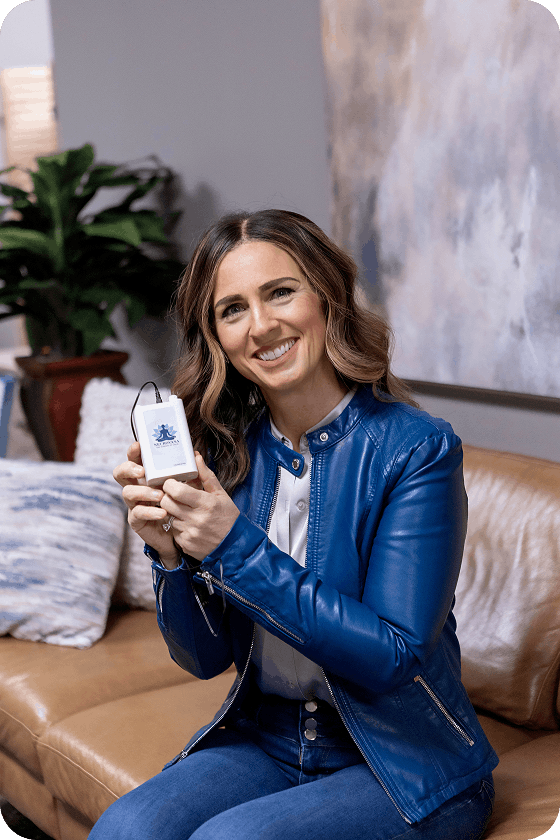
Why CES is Moving to the Forefront
When you look at where mental health care is going, a pattern emerges: Patients want more than symptom management — they want regulation, stability, and long-term improvement.
CES supports exactly that. Backed by research and validated through real-world clinical use, CES offers a non-invasive approach to:
But what makes the difference isn’t just the tool. It’s how it’s delivered.

A Shift in How Care is Delivered
A New Standard for Patient Care and Clinical Growth
In our clinical experience, the most meaningful results don’t come from isolated interventions. They come from structured, supported care.
CES becomes significantly more impactful when it is:
Reduced worry and stress-
 Introduced with clear expectations
-
Supported with follow-up
-
Integrated into an ongoing care plan

This is where Neurovana’s approach stands apart.

“Our goal has never been just to introduce CES. It’s to make it a consistent, reliable part of care — so that every patient who can benefit from it actually does.”
What Makes the Neurovana Model Different
This guide outlines a model developed from real clinical practice. A model designed to elevate every aspect of care delivery.

Improve Patient Experience
Patients aren’t left to figure things out on their own. They are guided, supported, and monitored throughout the process.

Increase Adherence and Outcomes
Structured follow-up and a defined protocol significantly increase the likelihood of meaningful improvement.

Support Sustainable Care Delivery
By integrating CES into a service model, clinics can expand what they offer while maintaining operational stability.
Real-World Results
Trusted by practitioners to improve engagement and outcomes.
"What stood out to me was how much more engaged patients became when CES was introduced as part of a structured plan instead of just a device. They understood the process — and followed through."
"We started seeing more consistent outcomes once we implemented the follow-up structure. Patients stayed with it longer, and that made all the difference."
"This approach made CES feel like part of a complete treatment system, not an add-on. It improved both patient experience and how we deliver care."
What You’ll Discover in This Guide

The Structured CES Treatment Protocol
A multi-phase approach designed to maximize outcomes:
- Initial intensive support
- Ongoing monitoring
- Long-term optimization
Each phase plays a specific role in helping patients achieve consistent results.

Models That Improve Access and Engagement
Practical approaches to making CES more accessible for patients, including:
- Structured care plans
- Flexible access models
- Systems that support long-term adherence

Integrating CES Into Everyday Practice
How CES can be incorporated into:
- Existing treatment plans
- Ongoing patient management
- A broader mental health care strategy
Creating a more complete and modern approach to care.
About the Authors
Clinical expertise grounded in real-world patient outcomes.

Tauna Young, FNP-C
Co-Author & Clinical Innovator
Tauna Young is a board-certified Family Nurse Practitioner specializing in psychiatry, with over a decade of hands-on clinical experience treating patients with anxiety, depression, insomnia, chronic pain, ADHD, and other complex psychiatric conditions.
She practices full-time in an outpatient setting, where she evaluates patients daily, prescribes and monitors treatment plans, manages medication side effects, and adjusts care based on real-world response—not theory.
Her clinical perspective has been shaped by working with patients who have often tried multiple medications, experienced treatment failures, or developed intolerance to standard approaches. It was through this lens that she discovered CES — and began building a new approach to care around it.

Tyson Flower, FNP-C
Co-Author & Clinical Strategist
Tyson Flower is a board-certified Family Nurse Practitioner specializing in psychiatry, practicing alongside Tauna in a full-time outpatient setting.
His work is grounded in evidence-based medicine and focused on real patient outcomes, particularly in cases involving anxiety, depression, insomnia, and treatment resistance.
Through both research and clinical experience, Tyson has focused on helping bridge the gap between what is known to work and what is consistently applied in practice. His contribution to Neurovana reflects a commitment to making CES both accessible and effectively implemented.
Download Your Free Clinical Playbook
Learn how CES can become a consistent, effective part of modern mental health care. Get access to the full model, protocols, and implementation insights.
Get My Free Guide